
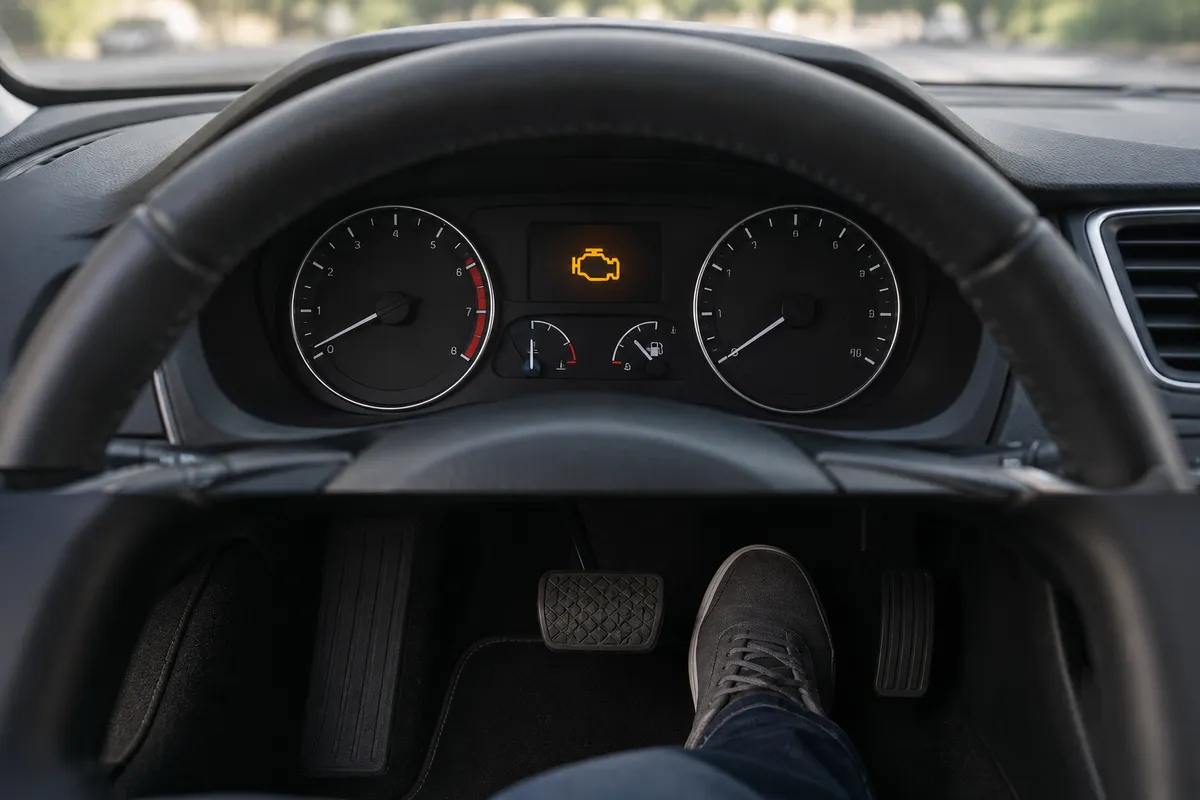
A story making the rounds, originally covered by Motor1, goes like this: a woman takes her car to a mechanic after the check engine light comes on, and the diagnosis is that it's because of how she drives. Specifically, her habit of slamming on the brakes. It's the kind of tale that gets shared because every driver has stared at that little orange engine icon and dreaded the bill.
Here's the practical payoff: by the end, you'll know how hard braking really wears on a car, what commonly lights up that warning, and what to ask a mechanic so you understand what you're paying for.
What the viral story claims (and what we can't confirm)
Per Motor1's coverage, the light was allegedly triggered by the driver's braking habit. The details are thin, and the story is a viral anecdote rather than a documented repair case. We don't have the make, model, the specific fault code, or the repair that was performed.
That gap matters. A check engine light is tied to the engine and emissions systems, while braking wear typically shows up elsewhere. So the honest read is this: hard braking is a real way to cost yourself money, but whether it directly caused this particular light is something the story doesn't fully establish. Treat it as a conversation starter, not a diagnosis you can apply to your own car.
Why hard braking costs more than you think
Even if it didn't light up the dash, slamming on the brakes is rough on a vehicle. Per the Motor1 piece, aggressive braking can wear down vehicle components faster. Think of it in plain terms: every hard stop converts a lot of motion into heat and friction at the brakes, and that stress adds up.
The practical takeaways:
- Look ahead. Easing off the throttle early means you need less braking later.
- Leave following distance. More space means gentler stops.
- Brake smoothly. Progressive pressure is easier on the parts than a sudden stomp.
None of this requires special skill. It just means treating your brake pedal as a dial rather than a switch.
Common reasons a check engine light comes on
The Motor1 article also lists common causes for the light. Since the specific list isn't something I can reproduce in full, here is the broader principle: the light is a general-purpose alert. It tells you the car's computer has detected a problem, not what the problem is. The cause could be minor or serious, which is exactly why guessing is a bad idea.
Steady versus flashing
A general rule many mechanics share: a steady light means get it checked soon, while a flashing light usually signals something urgent that warrants stopping driving and calling for help. Treat that as general guidance and confirm it against your owner's manual for your specific vehicle.
Get the code read
The single most useful step is having the diagnostic trouble code read. Many auto parts stores will do this for free, and a basic code reader is inexpensive. A code gives you a specific starting point instead of a vague "something's wrong."
Mechanic red flags versus legitimate diagnostics
A vague blame-the-driver explanation can be legitimate or it can be a shrug. Here's how to tell the difference.
Signs of a solid diagnosis
- The mechanic can name the fault code and what system it points to.
- They can show you the worn or failed part.
- They explain what happens if you wait.
- They give you a written estimate before work begins.
Signs to push back
- No code, no explanation, just a conclusion.
- Pressure to approve repairs immediately.
- A cause that doesn't connect to the warning (worth asking, politely, how the two are linked).
If a mechanic tells you your driving caused a problem, a reasonable follow-up is: "Which part, and how did my driving wear it?" A good shop will have an answer. If the answer is fuzzy, a second opinion is cheap insurance compared with an expensive repair.
How to avoid unnecessary repair bills
This is where the viral story earns its keep. Small habits and small questions save real money.
- Don't ignore the light. Small issues can grow when left alone.
- Get the code read first. Know what you're dealing with before you walk into a shop.
- Ask for the old parts or a demonstration. It keeps everyone honest.
- Get a second opinion on big quotes. Especially when the explanation sounds off.
- Drive smoother. Gentle braking and acceleration reduce wear across the board.
The takeaway
Whether or not braking habits lit up that woman's dash, the lesson holds: your driving style shows up in your repair bills, and a warning light deserves a real answer. Next time yours comes on, get the code read, ask the mechanic to connect the dots between cause and repair, and brake like the car is going to be yours for another hundred thousand miles.